

Where is Culture?
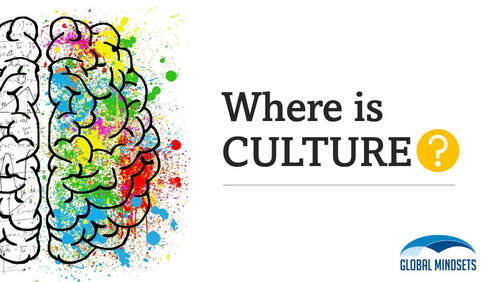
Recently I had an interesting conversation with Dr. Yaacov Tzori about where culture is "located." When he asked me, "Where is culture?" I confidently said, "In the mind," basing my argument on Hofstede's work and the well-known metaphor: "Culture is the software of the mind."
Recently I had an interesting conversation with Dr. Yaacov Tzori about where culture is "located." When he asked me, "Where is culture?" I confidently said, "In the mind," basing my argument on Hofstede's work and the well-known metaphor: "Culture is the software of the mind."
Then he challenged me and said, "I think that culture is embedded in the brain, while the choice regarding our behaviour and thinking is made by the mind."
I didn't expect this response, but it immediately raised my curiosity, and I was no longer sure where culture really is - in the brain (hardware) or in the mind (software).
As our discussion progressed, I realized this is a complex question that touches on the intersection of neuroscience, psychology, anthropology, and maybe even philosophy.
Let’s have a quick look at both perspectives:
Why is Culture in the Mind?
In simple words, culture is like the "software" of our minds because we are not born with it. Culture is a set of shared beliefs, values, and practices that we learn, similar to how we learn a new program.
It can also be changed and "reprogrammed" through exposure to new environments. Just as you can update software, people can change their cultural perspectives when they experience new things or live in different places.
Culture is not a physical thing you can touch. It operates at a more abstract level. However, it influences how we see the world and guides how we think and behave in our daily lives, much like how a computer program tells a computer what to do.
This view aligns with the idea that culture is primarily a cognitive construct, existing in the realm of ideas and mental representations.
Why is Culture in the Brain?
In simple words, culture is "hardwired" into our brains, like the hardware of a computer, because our cultural experiences can actually shape our brain's structure and how it works.
For example, studies have found that people from cultures that value emotional regulation and social harmony may have thicker prefrontal cortex areas linked to self-control and decision-making.
Additionally, studies in cultural neuroscience show that cultural backgrounds can influence brain activity patterns. Scientists have found that people from different cultures can have different patterns of brain activity when doing the same tasks.
Finally, our brains can physically change in response to our cultural experiences by forming new neural connections and modifying existing ones. This is called neural plasticity.
This perspective emphasizes the physical, neurological basis of cultural influences.
And the answer?
Eventually, I didn’t find a definitive answer to where culture is located. Perhaps the question itself might be flawed. In essence, asking whether culture is located in the brain or the mind might be a false dichotomy.
Culture likely exists at the intersection of both, with the brain providing the physical basis for cultural learning and expression, while the mind serves as the cognitive and experiential interface through which we engage with culture. Thus, culture is embodied in the brain but expressed and transmitted through the mind.
Where do you think culture exists?
Then he challenged me and said, "I think that culture is embedded in the brain, while the choice regarding our behaviour and thinking is made by the mind."
I didn't expect this response, but it immediately raised my curiosity, and I was no longer sure where culture really is - in the brain (hardware) or in the mind (software).
As our discussion progressed, I realized this is a complex question that touches on the intersection of neuroscience, psychology, anthropology, and maybe even philosophy.
Let’s have a quick look at both perspectives:
Why is Culture in the Mind?
In simple words, culture is like the "software" of our minds because we are not born with it. Culture is a set of shared beliefs, values, and practices that we learn, similar to how we learn a new program.
It can also be changed and "reprogrammed" through exposure to new environments. Just as you can update software, people can change their cultural perspectives when they experience new things or live in different places.
Culture is not a physical thing you can touch. It operates at a more abstract level. However, it influences how we see the world and guides how we think and behave in our daily lives, much like how a computer program tells a computer what to do.
This view aligns with the idea that culture is primarily a cognitive construct, existing in the realm of ideas and mental representations.
Why is Culture in the Brain?
In simple words, culture is "hardwired" into our brains, like the hardware of a computer, because our cultural experiences can actually shape our brain's structure and how it works.
For example, studies have found that people from cultures that value emotional regulation and social harmony may have thicker prefrontal cortex areas linked to self-control and decision-making.
Additionally, studies in cultural neuroscience show that cultural backgrounds can influence brain activity patterns. Scientists have found that people from different cultures can have different patterns of brain activity when doing the same tasks.
Finally, our brains can physically change in response to our cultural experiences by forming new neural connections and modifying existing ones. This is called neural plasticity.
This perspective emphasizes the physical, neurological basis of cultural influences.
And the answer?
Eventually, I didn’t find a definitive answer to where culture is located. Perhaps the question itself might be flawed. In essence, asking whether culture is located in the brain or the mind might be a false dichotomy.
Culture likely exists at the intersection of both, with the brain providing the physical basis for cultural learning and expression, while the mind serves as the cognitive and experiential interface through which we engage with culture. Thus, culture is embodied in the brain but expressed and transmitted through the mind.
Where do you think culture exists?
Comments