

Culture and Conflict: Insights from Personal Experience
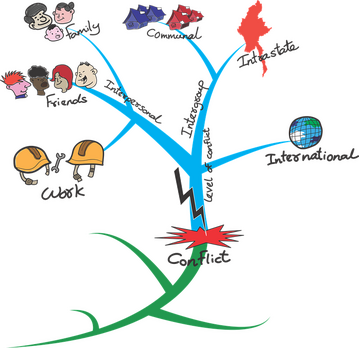
How do you resolve conflicts?
And how does culture influence your strategy?
And how does culture influence your strategy?
A few weeks ago, I had a disagreement with a very close friend of mine. We held very different views regarding certain behaviours at work. We tried to discuss it twice – once via text messages and once in a video call. However, each time we began talking about it, she asked to end the conversation, leaving me confused and unable to find a quick resolution to continue being good friends.
Reflecting on that experience and considering our diverse cultural backgrounds, I realized that although we both have extensive experience working in a global environment, the cultural factor remains strong and should never be overlooked.
Here are three insights I have gained from this uncomfortable situation:
Insight #1 – How comfortable are you with conflict?
This experience reminded me of our different comfort levels with conflicts. Individuals from certain cultures deal with conflict easily, while others find it more difficult.
I grew up in an environment where conflicts and debates are common. Many times, despite direct confrontation, both parties understand that disagreement is integral to relationships and can even deepen them if managed properly. It's as if there is a psychological safety net beneath every disagreement, protecting the relationship.
Insight #2 – What is your conflict resolution strategy?
Research shows that people from diverse cultures may use different conflict resolution strategies, ranging from competing, compromising, accommodating, or avoiding styles to discussion or engagement styles (depending on the model).
I am not saying that culture is the only factor here - our personality, relationships, and context also influence our conflict-resolution strategies.
In my culture, people are more likely to use an ENGAGEMENT strategy to resolve conflicts. They lay all cards on the table, share views openly, disagree, argue, and may even become extremely emotional.
The danger of this strategy in a multicultural environment is that it can be perceived as aggressive, causing others to lose face, and it might even be seen as a personal attack rather than addressing the situation.
In my friend’s culture, people are more likely to use an AVOIDANCE strategy, which is characterized by inaction. Showing a strong preference for avoidance is more common in collectivist cultures, where people strive to minimize disruption, preserve group harmony and relationships, and prevent an escalation of conflict. Direct confrontation is perceived as unnecessary and even immature, and people may wait for a better time to address the conflict (a valuable lesson in patience for me!).
The risk with this strategy is that individuals who are not familiar with it may interpret the act of walking away or being unresponsive as a sign of indifference or lack of care towards them or the relationship.
Insight #3 - My biggest mistake!
A few days later, I had my biggest "aha" moment and I realized the mistake I had made. My friend and I became so close that I couldn’t see her culture anymore!
I felt so comfortable and safe with our friendship that I expected her to unconditionally accept my conflict resolution style without making any adjustments to it. I forgot that we grew up in very different cultural environments with different value systems.
Learning to embrace behaviours and mindsets we are not comfortable with is at the core of my work. I believe that regardless of our style, we should always strive to step beyond our cultural habits and transform conflicts into meaningful dialogue.
What is your preferred conflict resolution strategy? And how do you close the gap in a culturally diverse environment?
Reflecting on that experience and considering our diverse cultural backgrounds, I realized that although we both have extensive experience working in a global environment, the cultural factor remains strong and should never be overlooked.
Here are three insights I have gained from this uncomfortable situation:
Insight #1 – How comfortable are you with conflict?
This experience reminded me of our different comfort levels with conflicts. Individuals from certain cultures deal with conflict easily, while others find it more difficult.
I grew up in an environment where conflicts and debates are common. Many times, despite direct confrontation, both parties understand that disagreement is integral to relationships and can even deepen them if managed properly. It's as if there is a psychological safety net beneath every disagreement, protecting the relationship.
Insight #2 – What is your conflict resolution strategy?
Research shows that people from diverse cultures may use different conflict resolution strategies, ranging from competing, compromising, accommodating, or avoiding styles to discussion or engagement styles (depending on the model).
I am not saying that culture is the only factor here - our personality, relationships, and context also influence our conflict-resolution strategies.
In my culture, people are more likely to use an ENGAGEMENT strategy to resolve conflicts. They lay all cards on the table, share views openly, disagree, argue, and may even become extremely emotional.
The danger of this strategy in a multicultural environment is that it can be perceived as aggressive, causing others to lose face, and it might even be seen as a personal attack rather than addressing the situation.
In my friend’s culture, people are more likely to use an AVOIDANCE strategy, which is characterized by inaction. Showing a strong preference for avoidance is more common in collectivist cultures, where people strive to minimize disruption, preserve group harmony and relationships, and prevent an escalation of conflict. Direct confrontation is perceived as unnecessary and even immature, and people may wait for a better time to address the conflict (a valuable lesson in patience for me!).
The risk with this strategy is that individuals who are not familiar with it may interpret the act of walking away or being unresponsive as a sign of indifference or lack of care towards them or the relationship.
Insight #3 - My biggest mistake!
A few days later, I had my biggest "aha" moment and I realized the mistake I had made. My friend and I became so close that I couldn’t see her culture anymore!
I felt so comfortable and safe with our friendship that I expected her to unconditionally accept my conflict resolution style without making any adjustments to it. I forgot that we grew up in very different cultural environments with different value systems.
Learning to embrace behaviours and mindsets we are not comfortable with is at the core of my work. I believe that regardless of our style, we should always strive to step beyond our cultural habits and transform conflicts into meaningful dialogue.
What is your preferred conflict resolution strategy? And how do you close the gap in a culturally diverse environment?
Comments